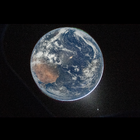
ScienceAlert|研究表明地球人口已超过地球容量
介绍: Earth's Population Has Surpassed The Planet's Capacity, Study Suggests
From: ScienceAlert
The human population has already grown too large and demanding for Earth to sustainably support at current consumption levels, a new study warns.
Based on more than two centuries of population data, a team led by Corey B...
介绍: Earth's Population Has Surpassed The Planet's Capacity, Study Suggests
From: ScienceAlert
The human population has already grown too large and demanding for Earth to sustainably support at current consumption levels, a new study warns.
Based on more than two centuries of population data, a team led by Corey Bradshaw of Flinders University in Australia found humanity is living well beyond the bounds of what our planet can support long-term.
Ecologists describe the ability of an environment to sustain a species' population as its "carrying capacity". It's an estimate of the number of individuals from any given species that can survive long-term, based on the resources at hand and the rate at which those resources regenerate.
Our own species, Homo sapiens, is particularly good at pushing the limits of what that carrying capacity might be, with our penchant for finding technological solutions to overcome the natural limitations of resource renewal – especially by exploiting fossil fuels.
Interestingly, the term "carrying capacity" has its origins in the late 1800s shipping industry, when coal-powered ships were replacing those propelled by wind. It was first used to calculate the amount of cargo one of the new ships could carry, without displacing the essential coal and water needed to actually power the ship, or the crew necessary to operate it.
It was this transition to fossil fuels in shipping and other industries that fundamentally enabled rapid population growth in the 20th century – something we're all being reminded of as the US-Iran War sends the global fuel supply and the global populations that rely on it into shock. Earth's current population sits at roughly 8.3 billion.
"Today's economies, predicated on uninterrupted growth, apparently do not recognize the regenerative constraints of sustained population expansion, because fossil fuels artificially make up the difference," the team writes.
Bradshaw and team have created an evidence-based estimate of human carrying capacity, using models of ecological growth to track the changes in population size and growth rates across the past two centuries, globally and regionally.
They differentiate between the maximum carrying capacity – the theoretical, absolute limit, regardless of how much famine, disease, and war come with it – and the optimum carrying capacity, where the population size is both sustainable and meets a minimum standard of living.
"Earth cannot keep up with the way in which we are using resources. It cannot support even today's demand without major changes, with our findings showing that we are pushing the planet harder than it can possibly cope," Bradshaw says.
capacity /kəˈpæsəti/ n. 容量;能力
The stadium has a seating capacity of 50,000.
这座体育场能容纳五万名观众。
estimate /ˈestɪmeɪt/ v. 估计;估算
The mechanic estimated the repair cost at $200.
修理工估计修理费要200美元。
exploit /ɪkˈsplɔɪt/ v. 利用;开发
We should exploit solar energy to reduce pollution.
我们应该利用太阳能来减少污染。
constraint /kənˈstreɪnt/ n. 限制;约束
Budget constraints forced us to cancel the trip.
预算限制迫使我们取消了这次旅行。
更多节目 全部>
-

Vol.1361
-

Vol.1360
-

ScienceAlert|NASA发布有史以来最清晰的月球照片
Vol.1358
-

Vol.1357
-

Healthline|为什么你会“报复性熬夜”,明明很累却不想睡觉?
Vol.1356